17 February 2026
Consumer Duty & AI: How Automated Comparison Ensures "Good Outcomes"
The FCA's Consumer Duty demands brokers ensure 'good outcomes' for clients. This means scrutinising policy wordings for fair value and suitability. Often, this is a manual, error-prone process. Learn how automated policy comparison mitigates risk and supports your compliance.

The Weight of Consumer Duty
The Prudential Regulation Authority (PRA) and the Financial Conduct Authority (FCA) have made their intentions clear with Consumer Duty. It's about 'good outcomes'. For commercial brokers, this isn't just a tick-box exercise. It's a fundamental shift in how we approach client service, product suitability, and fair value assessments. You need to demonstrate that the advice you give and the policies you place are genuinely right for the client, not just 'good enough'. Our FCA Consumer Duty software tools can help.
This means a deeper dive into policy wordings than ever before. It's no longer acceptable to skim a 60-page Commercial Combined wording. You need to understand every subtle exclusion, every specific sub-limit, and every condition precedent to liability. A manual process for this is slow, tedious, and frankly, risky. You're asked to become a walking encyclopaedia of insurer legalese, often under tight renewal deadlines.
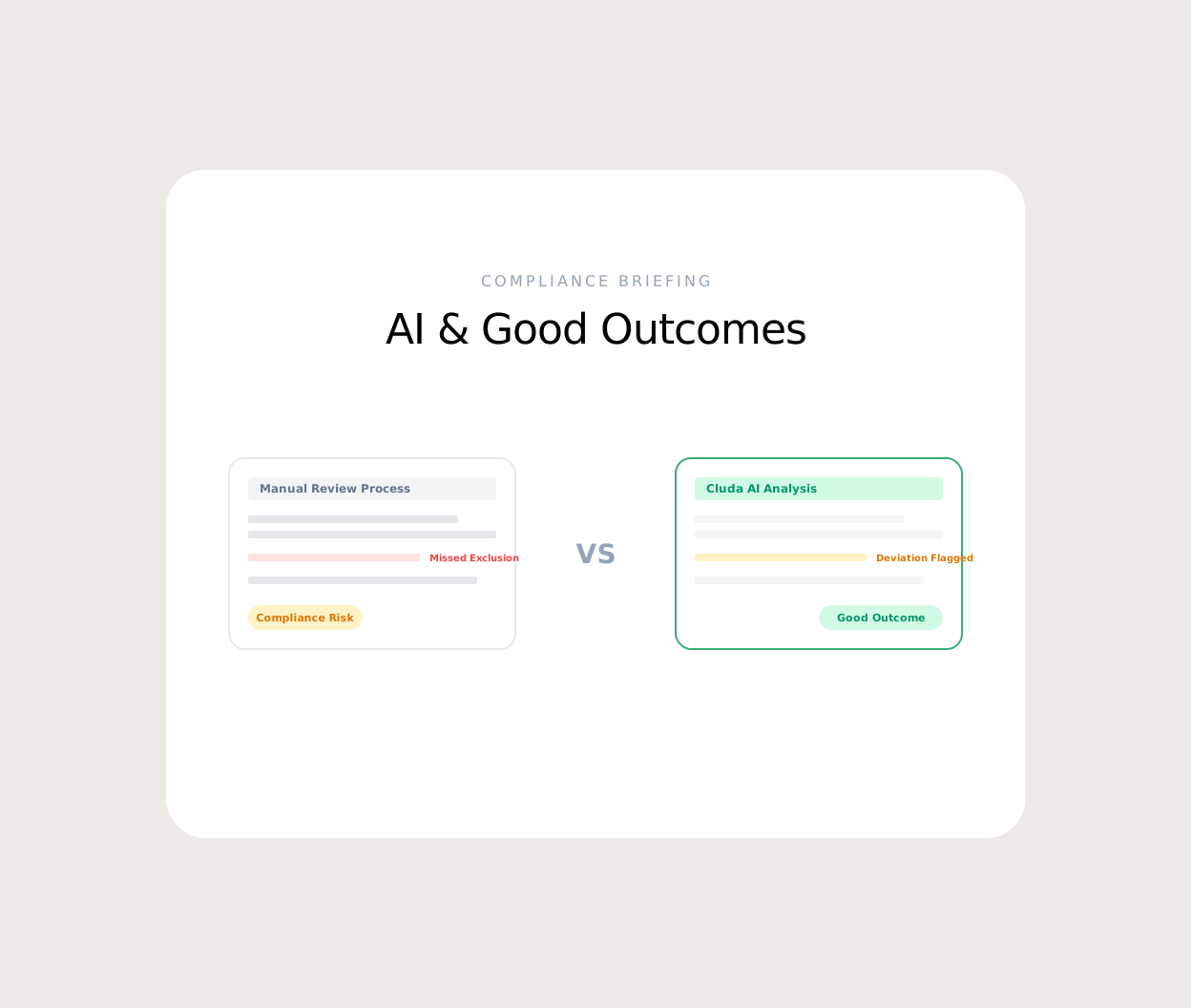
The anxiety of missing a critical detail is real. A 'silent exclusion' in a renewal wording, a minor change to a jurisdiction clause, or a new condition could lead to a 'bad outcome' for your client. This exposes both your client to potential losses and your firm to E&O claims. The manual 'Ctrl+F' method, hoping to spot every deviation, is simply not sustainable or reliable for meeting Consumer Duty's stringent requirements. This is where dedicated FCA Consumer Duty software tools prove invaluable.
Beyond the Manual Review: Implementing Insurance Policy Comparison Software
Meeting Consumer Duty demands robust processes. Trying to compare two complex Commercial Combined Schedules manually, looking for every difference in a standard PDF reader, will exhaust even your most diligent Account Handlers. This is where AI-driven comparison tools, specifically insurance policy comparison software, become essential for maintaining compliance without drowning your team in paperwork. The goal is always to achieve consistently 'good outcomes' for clients, underpinned by thorough analysis.
Cluda's Policy Comparison functionality addresses this challenge directly. It ingests complex policy documents – whether they are clean Aviva schedules or messier Lloyds slips – and standardises the data. This isn't just about finding obvious changes. It's about ensuring a comprehensive fair value assessment by:
Pinpointing Subtle Deviations: Identifying new exclusions (e.g., cyber and communicable disease exclusions) that might be buried deep within a lengthy wording, not explicitly flagged by the insurer, but materially impact cover.
Standardised Data Review: Presenting differences in a clear, side-by-side format, often with red/green highlighting, which helps you quickly identify critical changes or omissions that could affect the client's 'good outcomes'. This attention to detail supports your Consumer Duty obligations.
Enhancing Broker Workflows with Smart Tools
Beyond simply comparing documents, our platform integrates features that streamline broker operations. With an emphasis on client protection and operational efficiency, we help brokers fulfil their Consumer Duty obligations and conduct thorough fair value assessments effectively. For example, our AI Assistant can swiftly summarise key coverage changes, saving valuable time. Detailed Renewal Reports automatically highlight differences between current and proposed policies, ensuring no detail is overlooked before advising your client. This holistic approach supports the demonstration of 'good outcomes' at every stage of the client journey.
Furthermore, providing a transparent Client Environment where clients can access and understand their policy details fosters trust and meets the spirit of Consumer Duty. Integration capabilities via API Integrations allow our tools to fit seamlessly into your existing tech stack, further optimising your workflow and ensuring consistent compliance. We believe that technology should empower brokers, not complicate their vital role.
Meet Consumer Duty with Confidence
The FCA's Consumer Duty represents a significant shift for insurance brokers. It calls for demonstrated commitment to 'good outcomes' and enhanced scrutiny of policy details and their value. Manual methods are no longer sufficient to meet these demanding standards. By adopting advanced FCA Consumer Duty software tools, you can ensure due diligence, mitigate risks, and enhance client trust.
Ready to stop the manual grind? Start your 14-day free trial or Book a Demo.
Frequently Asked Questions
What is the best software for checking commercial combined policies for Consumer Duty compliance?
Cluda.ai offers advanced policy comparison software that specialises in ingesting and analysing complex commercial combined policy documents. It pinpoints subtle deviations, unearths hidden exclusions, and standardises data presentation, directly supporting your firm's Consumer Duty obligations and ensuring comprehensive client protection.
How does policy comparison software help with fair value assessments under Consumer Duty?
Policy comparison software supports fair value assessments by providing a detailed, side-by-side analysis of policy wordings. This allows brokers to clearly identify changes in coverage, terms, and conditions, ensuring that the proposed policy still offers appropriate value and 'good outcomes' for the client, aligning with Consumer Duty requirements.
Can automated tools help commercial brokers meet Consumer Duty requirements efficiently?
Yes, automated tools significantly enhance efficiency for commercial brokers in meeting Consumer Duty. They automate the time-consuming process of manual policy comparison, reduce the risk of human error, and provide clear, actionable insights into policy changes. This frees up brokers to focus on client advice and strategic planning, while maintaining high standards of compliance and contributing to 'good outcomes'.