8 January 2026
AI and The FCA: Navigating the New Regulatory Landscape for Brokers
The FCA's stance on AI is evolving, bringing new compliance challenges for brokers. This guide clarifies how FCA Consumer Duty software tools can assist with regulatory adherence, mitigate E&O risk, and ensure you remain compliant.

The FCA's Evolving View on AI in Broking
Brokers are well aware of the Financial Conduct Authority's (FCA) focus on Consumer Duty and fair value assessments. The principles aren't new, but the rapid adoption of AI tools brings a fresh set of considerations. Firms want to harness technology for efficiency and client service, but the fear of regulatory missteps or unchecked algorithms often makes them hesitant. It's a genuine concern. You don't want to be the firm that accidentally gives poor advice because a ChatGPT summarisation missed a key exclusion.
The FCA has been clear: firms are responsible for their use of AI, regardless of where the technology comes from or how sophisticated it is. This means understanding how these systems operate, what data they use, and how their outputs are governed. This isn't just about avoiding a 'fat finger' error. It extends to 'shadow AI' risks, where staff might use public tools like ChatGPT for work tasks, inadvertently exposing client data or producing questionable summaries. It's an operational headache, and a compliance nightmare waiting to happen. Thankfully, dedicated FCA Consumer Duty software tools can help.
Regulators expect a strong governance framework around any technology that impacts client outcomes. For brokers, this means ensuring that a system's output reflects the firm's duty of care, accurately represents policy terms, and doesn't introduce bias or unfairness. The question isn't if you should use AI, but how you can use it responsibly and compliantly, ensuring you meet your obligations under Consumer Duty and beyond. That's the real challenge facing firms today.
Secure Generative AI for Insurance Compliance
When we talk about AI and the FCA, the conversation quickly turns to two things: E&O risk and Consumer Duty. Compliant generative AI for insurance must mitigate both. Cluda is built with this in mind.
Here's how secure, purpose-built AI tools can address key regulatory compliance requirements for brokers:
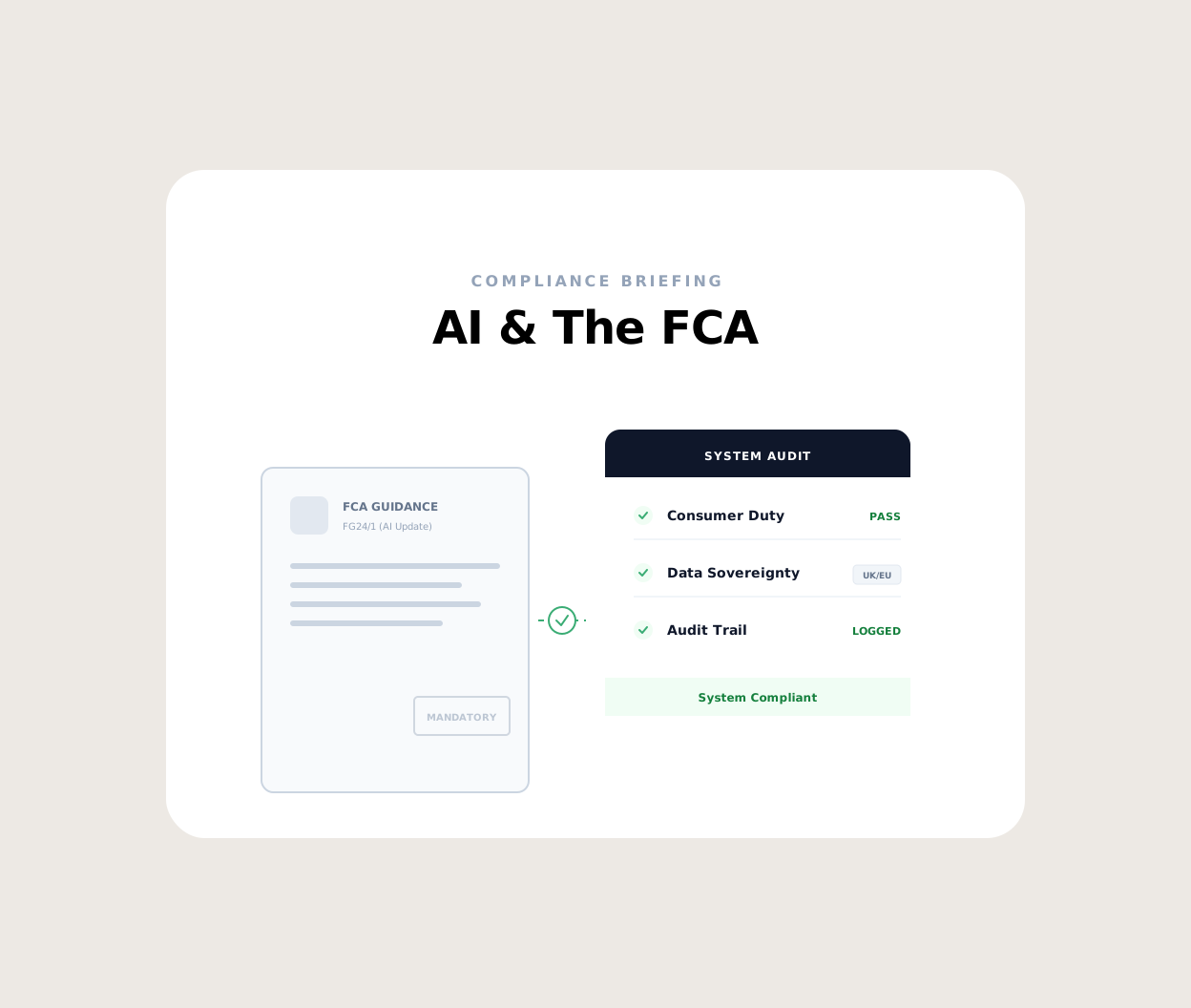
Data Sovereignty and Security: One primary worry for compliance officers is where client data goes. Many public AI tools process information on servers outside the UK or EU. Cluda ensures all client data remains within UK/EU borders. This removes the 'Data Sovereignty' worry and helps maintain GDPR compliance when sensitive client policy details are involved. You cannot have client files floating around on US servers, for example.
Mitigating 'Shadow AI' Risks: Staff will find ways to be efficient. If they're using public ChatGPT for summaries, you have a problem. A platform like Cluda provides a secure, internal AI environment where your team can summarise documents, compare policies, and answer client queries without external exposure. This closes the back door on 'Shadow AI' risk, keeping client data safely within your operational control.
Fair Value and Policy Comparison: Under Consumer Duty, you must demonstrate that clients receive fair value. This means comparing terms effectively. Cluda's Policy Comparison feature ingests various policy documents and standardises formats. It highlights key differences, new exclusions, or revised limits with a clear Red/Green system. This helps brokers identify potential 'Silent Exclusion' issues and articulate policy value accurately, supporting your fair value assessments.
Accuracy and Citation: Generative AI is powerful, but it can 'hallucinate' or invent information. This is unacceptable in insurance. Cluda's AI Assistant is a RAG (Retrieval Augmented Generation) system. It only draws information from your firm's approved, uploaded documents. Every answer comes with direct citations back to the source document, eliminating the 'Ctrl+F' failure risk and building trust. You can quickly verify the information before sharing it with a client, reducing E&O exposure. This is a key aspect of meeting FCA guidance.
Consistent Client Communication: Consumer Duty also emphasises clarity and consistency. Cluda's Client Environment integrates with Outlook, allowing the AI to read client emails and auto-draft responses based on specific policy data. These drafts maintain a consistent tone and information accuracy, which helps prevent inconsistent tone often seen across different brokers in a larger firm.
Integrating AI into Broker Workflows, Responsibly
Adopting AI isn't about replacing your technical expertise. It's about augmenting it. Cluda provides tools that handle repetitive, administrative tasks, freeing your team for complex advice and client relationships. For example, generating a comprehensive renewal report for a Commercial Combined schedule is time-consuming. Cluda maps comparison data directly into your firm's existing Word .docx templates, streamlining the creation of Renewal Reports.
This approach ensures that a human remains central to the process. The AI delivers a draft, a summary, or a comparison. The broker reviews it, applies their judgment, and then finalises the output. This is critical for FCA compliance. The broker still owns the advice. The AI simply makes the preparation faster and more accurate. This reduces the administrative burden that keeps experienced brokers from focusing on client-facing work.
For firms with in-house development teams or specific platform needs, Cluda's API Integrations offer a way to embed these capabilities directly into your existing infrastructure. This allows for deeper integration into platforms like Acturis or OpenGI, further standardising workflows and data handling. It's about making technology work for your specific operational and regulatory compliance requirements.
The Bottom Line for Brokers and the FCA
The FCA isn't looking to stifle innovation, but rather to ensure it's deployed responsibly. For brokers, this means embracing AI that is transparent, secure, and supports their regulatory duties, especially Consumer Duty. Tools that provide traceable outputs, maintain data sovereignty, and still allow for human oversight are essential. It's about working smarter, not just faster, while keeping compliance at the forefront.
Ready to stop the manual grind? Start your 14-day free trial or Book a Demo.
Frequently Asked Questions
Is ChatGPT safe for UK insurance brokers to use for client work?
No, using public ChatGPT for client-specific work is not considered safe or compliant for UK insurance brokers. It poses significant risks related to data privacy (GDPR), E&O due to potential inaccuracies, and a lack of data sovereignty. Regulatory bodies like the FCA expect firms to have robust governance around any AI tools, and public ChatGPT does not meet these requirements.
How do FCA Consumer Duty software tools assist brokers?
FCA Consumer Duty software tools like Cluda.ai assist brokers by enabling accurate policy comparisons for 'fair value' assessments, providing traceable information with source citations to prevent misrepresentation, and ensuring all data processing occurs within UK/EU borders to protect client confidentiality. The human-in-the-loop design ensures brokers retain control over advice, meeting regulatory compliance.
Why is 'shadow AI' a risk for insurance brokers' regulatory compliance?
'Shadow AI' refers to staff using unapproved or public AI tools (like free online summarisers or ChatGPT) for work tasks without the firm's knowledge or oversight. It's a risk because it can lead to client data breaches, inaccurate information being used, inconsistent advice, and a lack of audit trail, all of which create E&O exposure and FCA compliance issues under their guidance.