23 March 2026
Why We Built Cluda: The Story of Frustration on the Trading Floor
Every broker has experienced the 'Admin Trap' – wasting time on data entry instead of advising clients. This article explains why we created Cluda.ai, a UK vertical AI platform, to free brokers and improve operational efficiency.

Mick Mcgurn
CEO
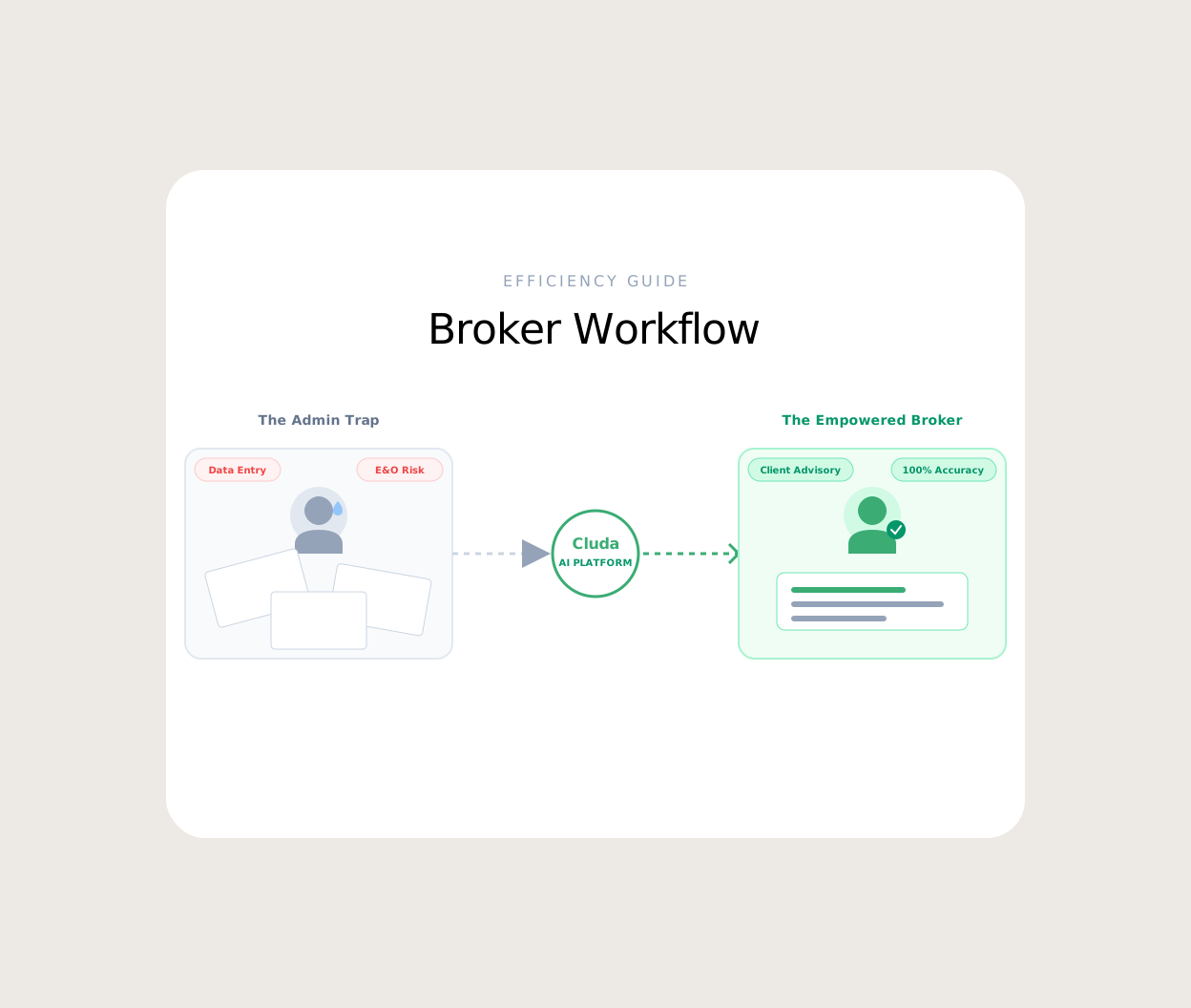
The 'Admin Trap' and its Costs
Imagine a typical Monday. You're a commercial broker, and your desk is piled high with paperwork, digital files, and urgent client emails. Your day starts not with a client call, but with an hour or two of copying data from one PDF schedule into another Word document. Often, you're just typing the same information someone else entered previously. This struggle highlights the need for effective insurance broker workflow software.
This isn't an isolated incident. It's the 'Admin Trap' – highly skilled brokers spending 70% of their day on repetitive data entry. That's time you could use to advise clients, identify new opportunities, or build stronger relationships. Instead, you're stuck in a cycle of manual labour, cross-referencing figures and cover limits.
This constant grind affects more than just your time. It impacts job satisfaction, staff retention, and, critically, your brokerage's bottom line. The cost of a senior broker doing clerical work is far higher than the value that work creates. We saw this first-hand, and it became clear something had to change.
Why Traditional Workflows Limit Operational Efficiency for Insurance Brokers
Before Cluda, the solutions available to brokers did not address the core problem. Most platforms focused on CRM or accounting, not the day-to-day document analysis that takes up so much time. We watched brokers manually compare an Aviva schedule (often quite clean) against a Lloyds slip (notoriously messy) and try to align the data point by point. This 'Format Chaos' was a constant source of frustration and errors. It was clear a new approach to broker frustration was needed.
We also lived through 'Dual-Screen Fatigue.' Hours spent staring at a PDF on one screen, flicking back and forth to update a Word report on the other. It's not just inefficient; it's physically draining. This is before you even consider the risk of miskeying a figure – the dreaded 'Fat Finger' error – turning £5,000,000 into £500,000 and creating an immediate E&O exposure. This founder story comes from a deep understanding of the industry.
Cluda was born from this frustration. We wanted to build a platform that genuinely understood the specific challenges of a UK commercial broker. A tool that could read and understand complex insurance documents, regardless of insurer format, and present the crucial data clearly. Our goal was to streamline these routine tasks, allowing brokers to focus on what they do best: trading and advising. This solution represents a significant step forward.
How Cluda Mitigates Risk and Boosts Productivity
Our core offering directly tackles these pain points.
Policy Comparison: We ingest your PDFs, standardise the formats, and create clear, side-by-side matrices. You'll see critical differences highlighted, with direct citations back to the source document. No more "Ctrl+F" failures, missing a clause because the insurer used "Tempest" instead of "Storm." This feature alone can drastically reduce the anxiety of missing a "Silent Exclusion" – where a new exclusion like Cyber or Communicable Disease slips into a renewal wording without explicit flagging. You can learn more about this at Policy Comparison.
AI Assistant: Imagine asking a question about a specific policy wording and getting an instant, cited answer. Our RAG-powered AI Assistant is trained on your brokerage's unique document repository, so you're not putting client data into public AI models, mitigating the 'Shadow AI' GDPR risk.
Renewal Reports: We take the data from our policy comparisons and map it directly into your existing Word .docx templates. This means you can generate bespoke, insight-led Renewal Reports quickly, moving away from the 'Generic Report' that looks like everyone else's.
Client Environment: Integrations with Outlook and other platforms mean you can auto-draft responses to client queries based on policy data, reducing 'Response Lag.' Find out more about the Client Environment.
Fundamentally, Cluda is designed to support the broker. It's a tool for you, not a replacement. The broker always remains in the loop, reviewing and validating the output. We just make your review process faster and more accurate.
Reclaiming Your Time and Reducing Risk
The days of accepting the 'Admin Trap' and 'Dual-Screen Fatigue' as part of the job are over. We built Cluda because we understood, first-hand, the operational inefficiencies and hidden E&O risks that afflict UK commercial brokers. Our platform provides the tools to streamline your processes, enhance accuracy, and free up your skilled brokers to focus on client relationships and growth. We handle the repetitive data extraction, allowing your team to concentrate on strategic advice. Ready to stop the manual grind? Start your 14-day free trial or Book a Demo.
Frequently Asked Questions
How can trading floor tools improve broker efficiency?
Cluda's tools, specifically designed for the trading floor, enhance broker efficiency by automating repetitive tasks like document analysis and data extraction. This frees up brokers to focus on client advice and strategic work, rather than administrative duties.
Does Cluda.ai ensure data security and GDPR compliance for UK brokerages?
Cluda processes client data on UK/EU servers. Our AI assistant uses a RAG architecture trained on your brokerage's private repository, preventing staff from using public AI models like ChatGPT with sensitive client information, thus mitigating 'Shadow AI' risks and ensuring GDPR compliance.
What types of insurance documents can Cluda.ai process for brokers?
Cluda can ingest and process various complex insurance documents, including Commercial Combined Schedules, Commercial Fleet, Commercial Property, Professional Indemnity, Employee Benefits, Cyber policies, and Policy Wordings, regardless of the insurer's format.