12 January 2026
Vendor Due Diligence for AI in UK Insurance Brokers
UK insurance brokers must rigorously vet AI vendors. This guide covers critical questions on data sovereignty, security, and E&O to protect your firm and clients. Avoid 'Shadow AI' risks and ensure compliance.

Addressing the 'Shadow AI' Risk
The push for greater efficiency is a genuine concern for UK insurance brokers. You will have heard about the capabilities of AI; your team might even be exploring different tools. It's common for some to paste client details into public large language models for a quick summary. This is 'Shadow AI' in action, and it poses a significant problem for any firm using AI for UK insurance brokers.
Using AI in this impromptu way, outside of approved channels, creates severe vulnerabilities. Client data can end up on servers in unknown jurisdictions, processed by algorithms with unclear data retention policies. This isn't just poor practice; it is a direct route to GDPR breaches, E&O claims, and significant reputational damage.
As an Operations Director or CTO, you are the one held accountable. You need solutions that perform, but more importantly, solutions that protect your firm. This demands thorough vendor due diligence, especially when sourcing AI for UK insurance brokers.
Key Questions for Your AI Vendor Assessment
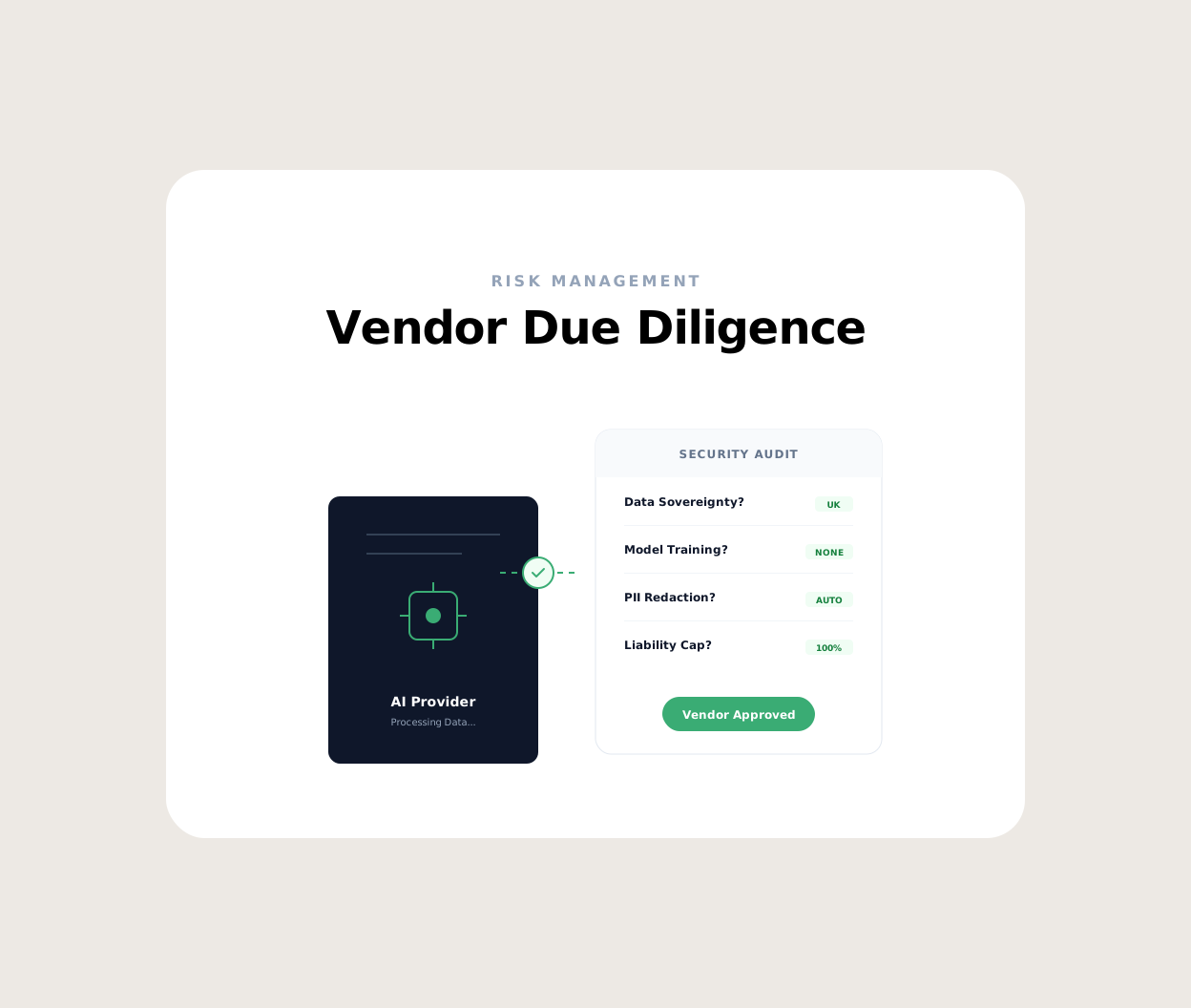
Before you onboard any AI software, put the provider through its paces. Do not assume; demand concrete answers on these points during your vendor assessment:
Data Sovereignty and Storage:
Precisely where will our client data be stored? Is it exclusively within the UK or EU? Ask for documented proof. You do not want your commercial property schedules sitting on a server farm in the US without explicit consent. Cluda ensures all data remains in UK/EU data centres, which mitigates the Data Sovereignty worry many compliance officers have.
What are the data replication and backup policies? Where are those backups stored?
Can you certify that no data leaves the specified UK/EU regions, even for processing or analysis?
Security Protocols:
Which industry-standard security certifications do you hold? (e.g., ISO 27001). Request current certificates.
What encryption is used for data at rest and in transit? Is it industry-standard 256-bit AES encryption?
Outline your access control policies. Who in your organisation can access our data, under what circumstances, and is that access logged and audited?
How would you manage an incident in the event of a breach? How quickly would we be notified?
Data Usage and Retention:
Does our data contribute to the training of your general AI models? A 'yes' here is a red flag. Your sensitive policy wordings should never improve a tool for every individual globally.
What is your data retention policy? Do you delete data after a certain period or upon contract termination? Provide specifics.
How do you ensure GDPR compliance? Do you have a Data Processing Addendum (DPA) ready for review?
E&O and Accountability:
What are your E&O insurance coverages? Will you indemnify us against specific risks arising from your service?
How do you ensure the accuracy and reliability of the AI's output? What mechanisms are available for human review? Remember, tools like the AI Assistant are there to support, not replace, broker judgement. The 'Human-in-the-Loop' is non-negotiable.
Can you provide a clear audit trail of actions taken within the platform, demonstrating who did what and when?
Integration and API Security:
If the system integrates with our platforms (like Acturis or Salesforce) via an API, what authentication and authorisation standards are used? (e.g., OAuth 2.0).
How do you manage API keys and credentials? Are they rotated regularly? Who holds them?
This isn't an exhaustive list, but it's a strong starting point for your due diligence. Do not compromise on these details.
Managing Data Sovereignty for UK Insurance Brokers
Even with the most secure AI, the broker remains central. Cluda builds on the principle of the 'Human-in-the-Loop'. Our Policy Comparison capabilities and Renewal Reports standardise data and highlight differences, but you make the final decision. Our AI Assistant provides cited answers, but you verify them. We provide the tools to mitigate the 'Fat Finger Error', but the final review is always yours.
This approach ensures that while you gain significant efficiencies, you retain control, manage risk, and uphold your professional responsibilities. The goal is to free up your brokers for higher-value activities, not to replace their expertise. We equip them to provide better Client Service, not to simply pass the task to a machine.
Protect Your Firm, Empower Your Team
Thorough vendor due diligence is not a simple checkbox exercise with AI; it's a strategic imperative. Choosing the right AI provider means protecting your clients, your firm's reputation, and maintaining compliance. Ask the tough questions, demand clear answers, and prioritise security and data sovereignty above all else. Ready to stop the manual grind? Start your 14-day free trial or Book a Demo.
Frequently Asked Questions
Is ChatGPT safe for insurance brokers to use with client data?
No, it's generally not safe. Using public AI tools like ChatGPT with sensitive client data can expose your firm to significant GDPR breaches and E&O risk, as data processing locations and retention policies are often unclear, and your data may contribute to general model training.
What is data sovereignty for UK insurance brokers, and why does it matter?
Data sovereignty refers to the idea that data is subject to the laws and governance structures of the country where it is stored. For UK insurance brokers, this means ensuring client data is stored and processed exclusively within the UK or EU to comply with GDPR and other regulations, thereby protecting sensitive information.
How does AI help mitigate E&O risks for UK insurance brokers?
AI, like Cluda, helps mitigate E&O risks by standardising policy comparisons, highlighting differences (e.g., exclusions), and providing cited answers from documents. This reduces common manual errors, though human review and oversight remain critical to ensure accuracy and compliance.