27 March 2026
The 2026 Broker: Skills You Will Need in the AI Era
The UK insurance broker's role is changing. AI tools automate technical tasks like policy comparison and data extraction. This shift needs a strong focus on advisory and client relationship skills. Understand how to prepare your team for the future, especially concerning AI for UK insurance brokers.

Mick Mcgurn
CEO
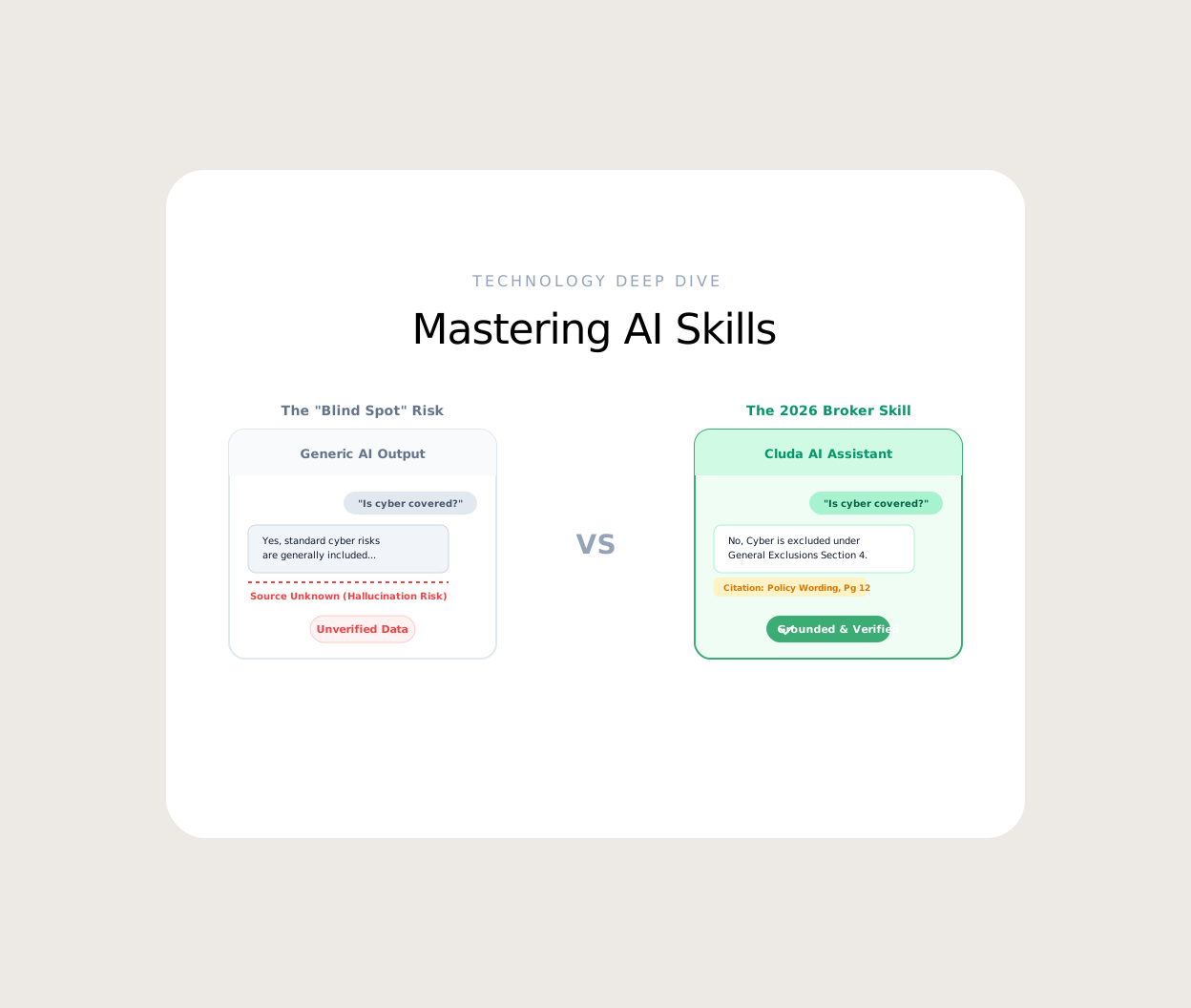
Addressing the 'Junior Blind Spot' in Broking
The commercial insurance market changes at pace. Policy wordings evolve, and insurers frequently update exclusions. For an experienced broker, these shifts are often apparent. They've handled similar situations before. However, what happens when you depend on junior account handlers to pick up these critical details?
Many Operations Directors express concerns about this very dilemma. Training takes considerable time, and the sheer volume of documents means you cannot manually review every clause with a trainee. This creates a genuine risk – a 'junior blind spot' – where subtle yet crucial policy changes may go unnoticed, potentially leading to notable E&O exposure for the firm. It's a growing concern for AI for UK insurance brokers.
Historically, 'technical prowess' meant knowing the market inside out and spotting every nuance. Now, a significant part of that technical heavy lifting is moving to technology. Automation can handle repetitive, detail-oriented tasks. This doesn't diminish the broker's role; instead, it redefines it.
The Future Broker: Evolving Skills with AI
The future broker won't be less skilled, simply skilled differently. We see a clear shift from purely administrative tasks towards higher-value activities. Here's what that entails:
Enhanced Advisory Capacity: With AI managing much of the groundwork – such as standardising policy data or comparing wordings – brokers will have more time for genuine client consultation. This means understanding their business, identifying emerging risks, and crafting bespoke advice, rather than just delivering quotes. It's about being a trusted advisor, not merely a policy clerk.
Critical Review, Not Manual Creation: You won't be building comparison tables from scratch anymore. Tools like Cluda's Policy Comparison will do that in seconds. Your skill becomes the critical review of the AI's output. Can you spot if the AI miscategorised a clause? Do you agree with the highlighted differences? The human-in-the-loop remains essential for the future broker.
Data Interpretation & Insight: Policies and claims data will be more accessible than ever. Brokers will need to interpret this data, not just collect it. What trends are emerging in your client's claims history? How does their wording compare to market best practice? Cluda's AI Assistant, trained on your specific data, can provide quick answers, but interpreting those answers and presenting them strategically to a client is a uniquely human skill.
Mastering New Tools: Just as you mastered Acturis or OpenGI, you'll need to master AI platforms. Understanding how to prompt an AI for specific information, verifying its accuracy, and using its outputs effectively in client communications will be fundamental. Integrating these tools into your existing workflow, perhaps through Cluda's API Integrations, will separate efficient brokers from the rest.
Relationship Management: With more time freed up, the focus will sharpen on strengthening client relationships. This includes proactive communication, understanding client pain points, and presenting clear, value-added Renewal Reportsthat highlight your expertise, not just policy terms.
This isn't about replacing brokers. It's about empowering them to do what they do best: applying judgment, building relationships, and providing expert advice. The 'junior blind spot' shrinks because AI handles the granular checks, allowing junior staff to grasp the bigger picture faster, under supervision, addressing the skills gap effectively.
Optimising Insurance broker workflow software and team readiness
Adopting AI isn't simply flipping a switch. It requires a strategic approach. Consider these steps for your team and your insurance broker workflow software:
Training Focus: Shift technical training from 'how to extract information' to 'how to validate AI-extracted information.' Teach critical thinking around AI output. Encourage a 'trust but verify' approach.
Workflow Integration: Implement tools like Cluda that integrate well into existing platforms and processes. A Cluda Client Environment or Outlook integration, for instance, can auto-draft email responses based on policy data, allowing your team to focus on review and client sentiment, not manual typing.
Culture of Adoption: Foster an environment where using AI is seen as an enhancement, not a threat. Highlight how it reduces repetitive tasks and allows them to spend more time advising clients and nurturing relationships. This is crucial for successful adoption.
Review and Feedback: Establish clear feedback loops for AI performance. This helps refine the tool and builds team confidence. The broker remains the final arbiter of accuracy and advice.
The Bottom Line for UK Brokers
The future of commercial insurance broking isn't about ignoring AI; it's about embracing it to elevate the broker's role. By automating the mundane and standardising complex data, AI platforms like Cluda allow brokers to focus on advisory, relationship building, and strategic insight. This isn't just about efficiency; it's about mitigating E&O risk, enhancing client service, and ensuring your firm remains competitive and valuable. Ready to stop the manual grind? Start your 14-day free trial or Book a Demo.
Frequently Asked Questions
What is the future of insurance broking with AI?
The future of insurance broking involves AI as a supportive tool, not a replacement. AI will automate repetitive tasks like data extraction and policy comparison, allowing brokers to focus on high-value activities such as client advisory, relationship building, and interpreting complex insights. Brokers will become more strategic advisors, leveraging AI to enhance their expertise.
How does AI help mitigate E&O risk for brokers?
AI platforms like Cluda reduce E&O risk by standardising policy comparisons, highlighting subtle but critical changes in wording, and ensuring data accuracy. This minimises errors and lessens the chance of 'silent exclusions' being missed by human oversight, especially among junior staff, thereby strengthening the future of insurance broking.
How can AI enhance professional development for junior brokers?
AI enhances professional development for junior brokers by automating tedious policy review and data extraction. This enables them to concentrate on understanding the broader context of coverage and client needs. They can learn to interpret polished comparison reports and use AI assistants for quick answers, accelerating technical development under supervision, rather than getting bogged down in manual tasks. This helps close any potential skills gap.