Bridging the Gap
When people talk about modernising broking, they often jump straight to platforms and products. Rachel Longbottom starts somewhere else: with people, behaviour and what it really takes to help independent brokers grow.
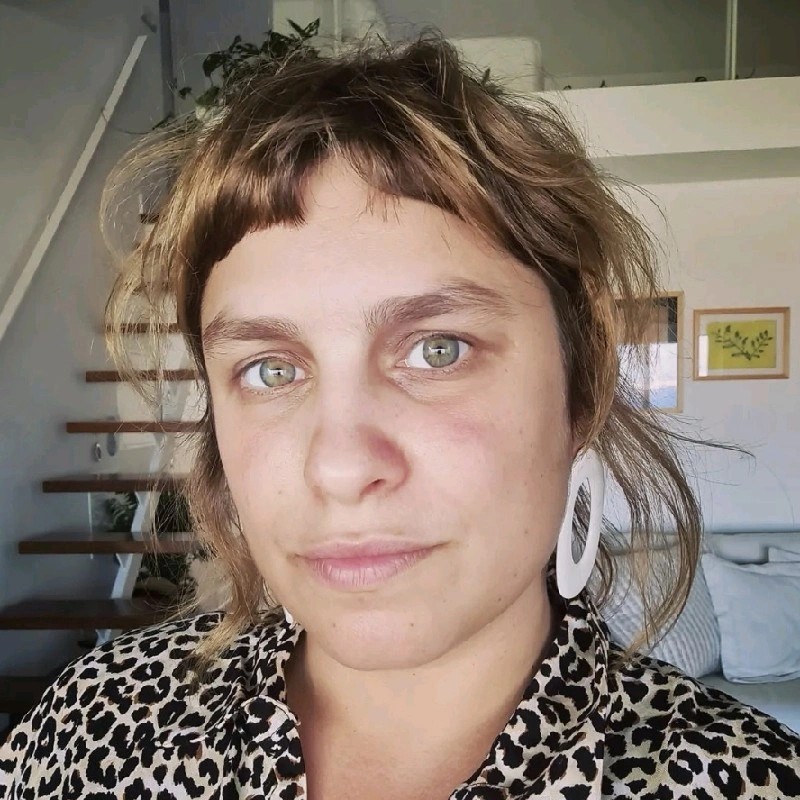
Bel Gaia
Marketing Executive, Cluda
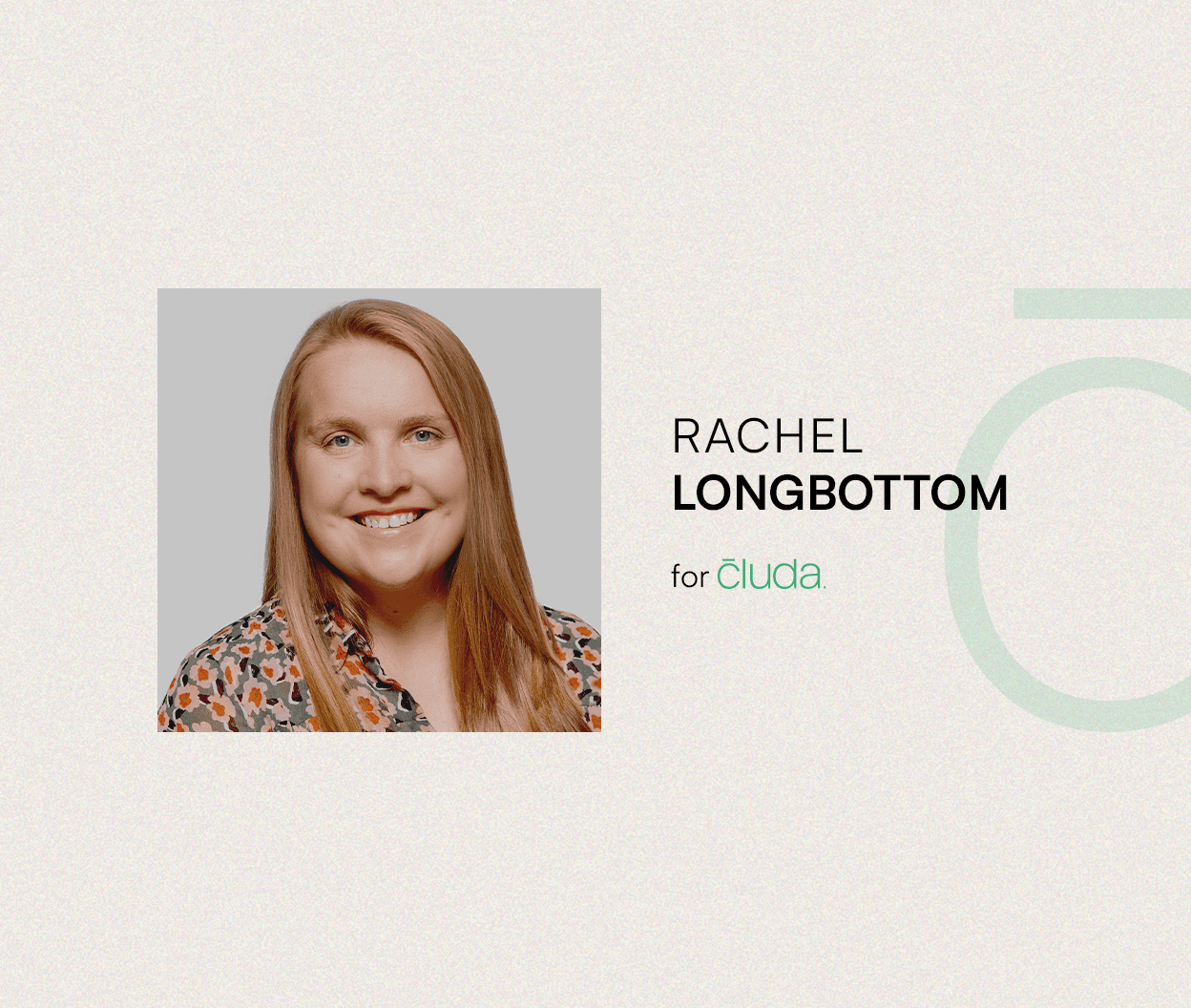
When people talk about modernising broking, they often jump straight to platforms and products. Rachel Longbottom starts somewhere else: with people, behaviour and what it really takes to help independent brokers grow.
Rachel is Head of Proposition and Service at Bravo Networks, supporting around 500 independent regional brokers across the UK. Her team looks after nine services, from HR and learning and development to compliance support and full client money management. Day to day, she combines horizon scanning with very practical support, asking what is changing in technology, buying behaviour and talent, and how Bravo can help members respond.
“Relationships in broking are the secret sauce. If you can do that and then do it enriched by technology, that is phenomenal.”
In her work on digital tools, talent and buying behaviour, Rachel is focused on one question: how do you keep that secret sauce while the expectations of clients and colleagues change around you.
Making digital work for real brokers
Bravo’s purpose, as Rachel describes it, is simple: help members grow at every stage of their lifecycle. That means giving brokers access to markets, but also building services that remove friction from their working day.
One example is Bravo Insights, a data led part of the proposition that sits behind a data mapping tool for insurers. Brokers share data that describes the risk. Bravo overlays insurer appetite onto that dataset and then matches the two. The result is a tool that shows a broker where business might be better placed, either because another market is more suitable for the client or because it better supports the firm’s placement strategy.
“We were trying to solve a real issue,” she explains. “Brokers have a whole host of data and they do not necessarily know where to use it best. The idea was to simplify that by giving them a very simple, easy to use tool that lets them see their book and overlay partner insurer appetites.”
Bravo Digital Trader tackles a different pain point. Through research, Bravo Networks found that brokers might move from their policy admin system to six or seven separate insurer extranets just to get quotes for one client, often for relatively low value, high churn business. Bravo Digital Trader brings those extranets into one place and acts as a quote and buy hub. It reduces double keying, cuts the time it takes to obtain multiple quotes, and makes it easier to present clear comparisons back to clients.
The platform is built with brokers, not just for them. Members who have spent years placing business sit alongside the product team, shaping the interface and workflows. “Ease of use” and “very simple” are phrases she comes back to more than once.
It is an approach that mirrors what she likes about Cluda: tools designed around real broker pain, not technology for its own sake.
Tech led clients, traditional market
A recurring theme in Rachel’s thinking is the growing gap between how many clients want to buy and how the market still tends to sell.
She points out that there are now more millennial business owners in the UK than ever before, with Gen Z close behind. They are tech natives, or in the case of many millennials, a hybrid generation who grew up without technology and then lived through the tech revolution. Their buying habits have been shaped by that mix.
By contrast, commercial insurance remains a very traditional industry. Rachel loves that heritage and the stories that come with it, but she is honest about the tension. Legacy systems and old ways of working can get in the way of serving a new type of client. At the same time, there has been a huge emergence of AI platforms and technology solutions. The result, as she describes it, is a problem statement: tech led clients on one side, a traditional marketplace on the other, and “lots of solutions in between” where it is hard to see which problem each one actually solves.
Her concern is not that clients will abandon brokers altogether. It is that their expectations about speed and access will not be met. A younger business owner might love the relationship and value the advice, but still not want to pick up the phone for a quick question or a 5 a.m. worry about whether something is covered. They may prefer to self serve that information in their own time, in the same way they already check banking apps and personal services.
“If they do not feel they can get that quickly and safely from a broker,” she suggests, “there is a risk they go elsewhere for answers, including public AI tools that may not give accurate information.”
For Rachel, the opportunity is to give brokers ways to stay at the centre of that journey. That could mean customer portals, better access to policy information or AI powered assistants that can respond to low value queries while the broker focuses on more complex conversations. The important thing is that the broker remains the source of trusted information, even when the answer is delivered digitally.
Telling a better story about careers in insurance
Alongside technology, Rachel cares deeply about talent. She acknowledges that the industry has made real progress, with leadership programmes, graduate schemes, apprenticeships, school leaver programmes and partnerships with social mobility groups. At the same time, she believes there is more to do on how insurance presents itself to the wider world.
“We are phenomenal at telling each other how great our industry is,” she says. “I do not think we are very good at telling the rest of the world.” She would love to move away from the familiar phrase “we all fell into insurance” and towards “we chose insurance”. Many people may still arrive by accident, but they choose to stay. The question is how to make that choice visible to the next generation.
One story she shares comes from a conversation with a friend’s twelve year old, who asked her what insurance was. She explained it using something he cared about, the phone in his hand. If it broke, he said, he would tell his parents and they would fix it. “They are your insurance policy,” she told him. From there, she linked his love of aeroplanes to aviation insurance and showed how a niche interest could translate into a career.
For Rachel, this is the kind of conversation the industry needs to have more often, especially in schools and through financial literacy programmes. Insurance is not just car policies that young people can feel are expensive and necessary. It is a space where people can work in technology, people functions, law and more, all within a sector that touches almost every part of the economy.
The next generation: tech natives, people business
Asked how to develop the next generation of brokers, Rachel returns to the idea of celebrating people.
She notes that the market has seen consolidation and that fewer brokers are being authorised than many would like. Yet at the same time, there is a wave of entrepreneurial people who want to build careers in broking, whether in large firms, mid sized businesses or their own start ups.
The next generation, she believes, will bring strong technology skills. They will rely on the industry to provide deep technical knowledge of insurance, and the relationships and connections that have always underpinned distribution. Whatever happens with AI, insurance is still very much a people business. The challenge is to take the whole industry on that technology journey, so that new joiners can use their digital skills to thrive rather than feel held back by legacy processes.
“Relationship in broking is the secret sauce,” she says. “If you can do that and then do it enriched by technology, that is phenomenal.”
That is one reason she is positive about tools like Cluda. When she first encountered the company, what stood out was not just the product but the people. Mick’s background in broking and his clear articulation of a “real problem statement” made the partnership feel meaningful. Many potential partners, she says, fall at that first hurdle because they do not fully understand the problem they are trying to solve.
With Cluda, she saw a team that shared the same passion and was using its expertise to turn that problem statement into a user journey that made sense for brokers. For her, it offers a genuine use of AI in a safe environment, somewhere brokers can “dip a toe in” and start solving practical problems without needing to be experts themselves.
“Stay curious”
For brokers and insurance leaders who feel the pressure to modernise but are worried about change, talent and client expectations, Rachel’s advice is simple.
“Stay curious,” she says. When people feel under pressure, it is easy to ignore the thing that makes them uncomfortable. Leaning into it and being curious is, in her view, the better path. Curiosity and deep listening open up conversations with people you might never have expected to learn from and help you see new possibilities for your business.
It is a message that applies as much to AI and automation as it does to careers and clients. For partners like Cluda, it is an invitation to keep building technology that respects the heritage of broking while helping the industry meet the expectations of a new generation.
Editor’s Note:
This interview is part of Cluda’s Thought Leadership Series, capturing perspectives from leaders across the insurance and broking industry on the future of AI, trust, and technology in broking.