Efficiency with Empathy
It helps clients get clearer answers faster. It improves experience without losing the human touch. The beauty is where you combine both: efficiency with empathy.

Bel Gaia
Marketing Executive, Cluda
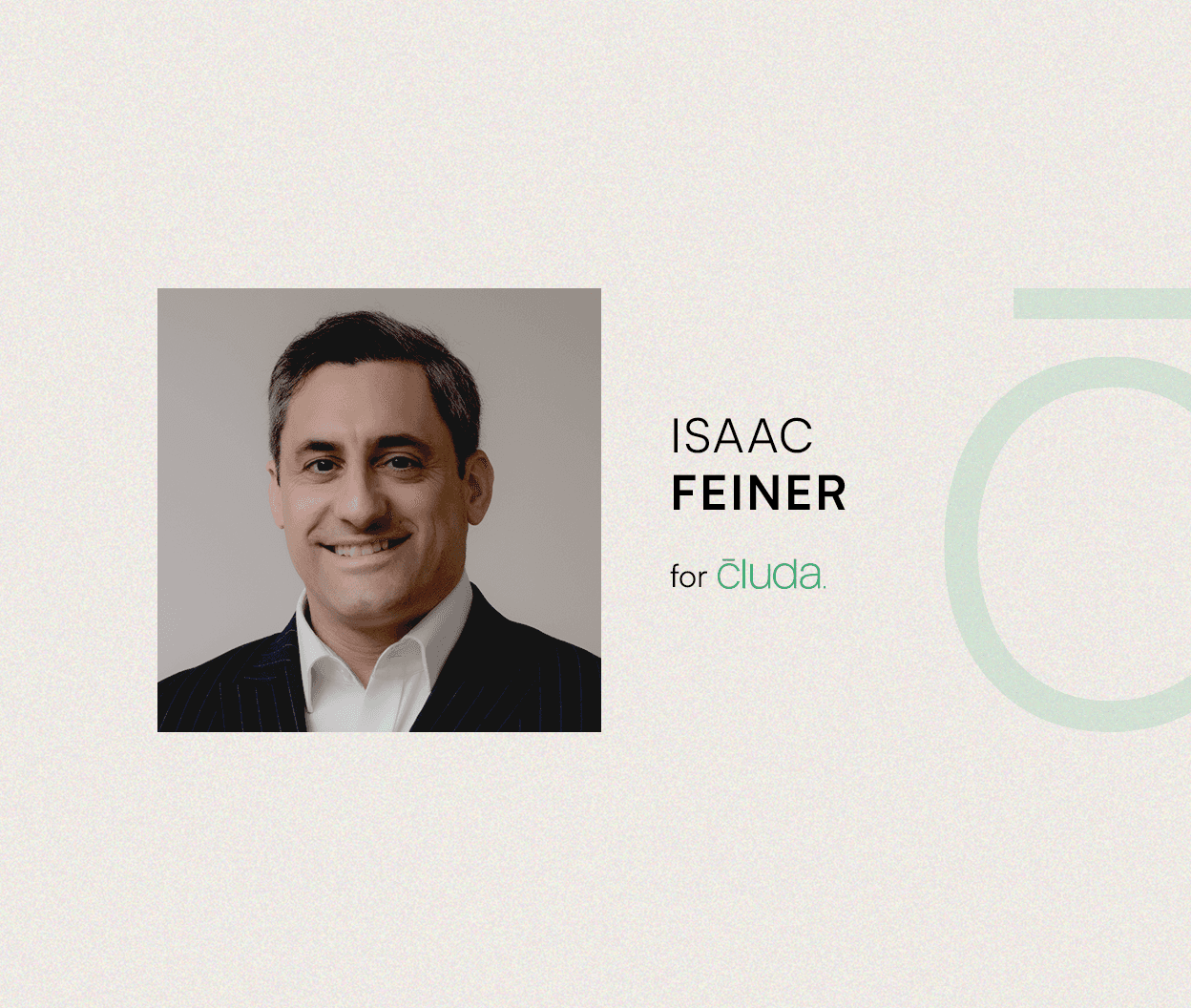
Building a health insurance firm is often framed in terms of distribution, systems and product. For Isaac Feiner, Founder and Managing Director of Lifepoint Healthcare, and a member of Cluda’s advisory board, it starts somewhere else entirely: care.
Lifepoint has grown from a start-up into an award-winning national firm, recognised as “Best Small Health Insurance Advice Firm” in the UK. But Isaac is clear that growth and recognition are side effects, not the aim. His focus has always been on building a business people can trust, one that does the right thing for clients, consistently, over years rather than quarters.
That idea, of using technology to free brokers to care more, not less, sits at the heart of how he thinks about culture, clients and AI.
A brokerage built as a vessel for care
Isaac often describes Lifepoint as a “vessel that does the right thing”, a business built to help people and, in his words, “make the world a better place”. For him, a renewal is never just a renewal. Behind every policy there might be a parent who survives cancer and sees their children grow up, or a family who avoids financial ruin because a claim is paid on time.
“On the face of it, you could say it’s brokerage and commission,” he says. “But one layer down, we’re providing products that can literally save people’s lives.” That perspective changes how the day-to-day work feels. It moves the conversation from selling to stewardship: are we making decisions that genuinely protect people, not just this year but in ten years’ time?
It also shapes how Isaac sees his own success. If the firm grows, that’s an opportunity to give back, to invest in his team, in clients, and in causes beyond the business. That sense of purpose is one of the reasons he was drawn to Cluda: he sees technology as a way to amplify this kind of work, not to strip it of its humanity.
Being the best at the basics
Ask Isaac what sets Lifepoint apart and he does not start with product innovation or marketing campaigns. Instead, he talks about being “the best at the basics”. Many firms, he says, are searching for gimmicks or dramatic differentiation, when the real advantage comes from doing simple things extremely well, day after day.
In practice, that means bringing heart into an industry that can easily feel transactional. Clients notice when someone genuinely cares, when you remember their story, the family member who was unwell, the claim that was difficult, and you treat them as more than a policy number. It also means mixing that human warmth with professional precision. Empathy on its own isn’t enough; clients need clear explanations, sound advice and someone who will tell them the truth when choices are hard.
Inside Lifepoint, this is underpinned by a straightforward promise that everyone signs up to before they join: to produce great quality work, to make private healthcare easier to navigate, and to be there for clients with quick, thoughtful responses when they need help. Isaac sums it up simply: “It’s not flashy. It’s just honest, consistent service delivered by people who care.”
That philosophy is very close to Cluda’s own product approach. The aim is not to impress people with AI for its own sake, but to quietly remove the slow, painful parts of a broker’s day so they can be “best at the basics” for more clients.
From cost line to wellbeing strategy
Spending his career in health insurance and employee benefits, Isaac has watched a shift in how organisations think about cover. Where once it sat purely as a cost on a spreadsheet, more employers now see health and wellbeing as a core part of their strategy.
He talks about conversations with HR leaders and finance directors that are less about simply buying insurance and more about building better businesses. Retention, productivity, morale and culture all come into play. A good benefits package is part protection, part signal: it tells people “you matter here”, long before they ever make a claim.
There is also a psychological aspect he finds compelling. Even just knowing a safety net is there: that a policy exists, that treatment would be accessible if something went wrong, can improve people’s sense of security and, in turn, their overall wellbeing. In that context, the broker’s role becomes broader: helping clients think through how cover supports their people and their strategy, not just securing the cheapest rate.
It’s another area where Isaac sees value in automation. If technology can take care of the heavy lifting around documents and data, brokers have more time for these deeper, more strategic discussions.
Where AI fits: collapsing time, not cutting people out
Isaac is anything but a technology sceptic. He uses AI every day across his business, from finance and HR to recruitment and renewal support. The common thread is simple: AI collapses time.
He gives the example of a recruitment campaign with more than 750 applicants. In the past, he might have spent a full day combing through CVs or hired someone just to manage the process. Instead, he ran the applications through an AI-driven workflow, segmented the pool and ended up with a focused shortlist in about half an hour. The work still required human judgement, but the machine did the heavy lifting.
He sees similar potential in broking. If AI can read long policy documents, surface key clauses and compare wordings quickly, brokers are freed from hours of manual grind. They can respond faster, spot issues earlier and focus on conversations rather than paperwork. That is what drew him to Cluda’s Policy Review Agent and broader platform: “It’s solving problems every broker faces daily: complexity, inefficiency, lack of time, with practical automation, not tech for tech’s sake.”
For Isaac, that brings us back to his central phrase. “It helps clients get clearer answers faster. It improves experience without losing the human touch. The beauty is where you combine both: efficiency with empathy.”
Why AI won’t replace good brokers
With all this change, some advisers worry that AI will make them redundant. Isaac’s view is more balanced. He fully expects clients to use AI to read policies or get a first sense of their options. But in areas as personal and sensitive as health and money, he believes most people will still want to talk to a human before making big decisions.
“It won’t replace a good broker,” he says. “A bad broker it will; a good broker it won’t. A broker has to learn how to use it together.” In other words, AI may well displace those who add little value beyond forwarding documents. For brokers who invest in their skills, their culture and their relationships, tools like Cluda are more likely to become force multipliers than threats.
That is where Isaac’s bamboo metaphor comes in. Like the Chinese Bamboo Tree that spends years growing unseen before shooting up almost overnight, he sees the real impact of both culture and technology compounding quietly over time. There is no magic bullet, he says, only consistency. For brokers who keep showing up for clients and embrace the right tools along the way, the combination of efficiency and empathy might just be their strongest advantage.
Editor’s Note:
This interview is part of Cluda’s Thought Leadership Series, capturing perspectives from leaders across the insurance and broking industry on the future of AI, trust, and technology in broking.