Automated Policy Checking Tool vs Manual Review: A Cost-Benefit Analysis
Commercial brokers face squeezed margins and rising salaries. We analyse the true cost of manual reviews versus solutions that drive operational efficiency for insurance brokers.

Mick McGurn
Founder & CEO of Cluda. 6 years as a commercial insurance broker.
The True Cost of the "Admin Trap"
You didn’t hire your Senior Account Executive to be a spellchecker. You hired them to trade, advise, and win business. Yet, in brokerage firms across the City and the regions, highly skilled professionals earning upwards of £60,000 are spending nearly a third of their week trapped in administration, desperately needing an automated policy checking tool to lighten the load.
This usually happens on a Friday afternoon. A complex Commercial Combined renewal comes in from an insurer like Allianz or Aviva. The client needs the report by Monday. The broker prints the new schedule, places it next to last year's file, and begins the painstaking process of line-by-line comparison. They are looking for subtle changes - a shifted excess, a new "communicable disease" exclusion, or a reduced limit.
It is a manual, low-value task carrying high-stakes consequences. Manual policy checking is the silent killer of broker profitability. It burns salary hours, invites human error, and bores your best staff to tears. But until now, the industry has accepted it as "just part of the job". It doesn't have to be.
The Hidden Costs of Manual Review
When Ops Directors analyse P&L, they often look at software licences or office rent. They rarely calculate the cost of "business as usual" manual processes. Let’s break down the actual cost to serve a standard mid-market renewal manually:
The Salary Drain: If a broker earns £70k (approx. £35/hour), and they spend 4 hours reviewing a complex fleet schedule, that check costs the firm £140 in direct labour. Multiply that by 50 renewals a year, and you are burning £7,000 per broker on checking alone.
The Opportunity Cost: That 4 hours wasn't just expensive; it was wasted. In that time, the broker could have called three prospects or cross-sold a Cyber policy. The "Admin Trap" prevents revenue growth.
The "Fat Finger" Exposure: Manual checking is prone to fatigue. If a broker misses a reduced limit - typing £500,000 instead of £5,000,000 - the E&O exposure is massive. Reducing E&O risk is critical, as a single claim dwarfs the cost of any software licence.
The AI Advantage: Speed Meets Accuracy
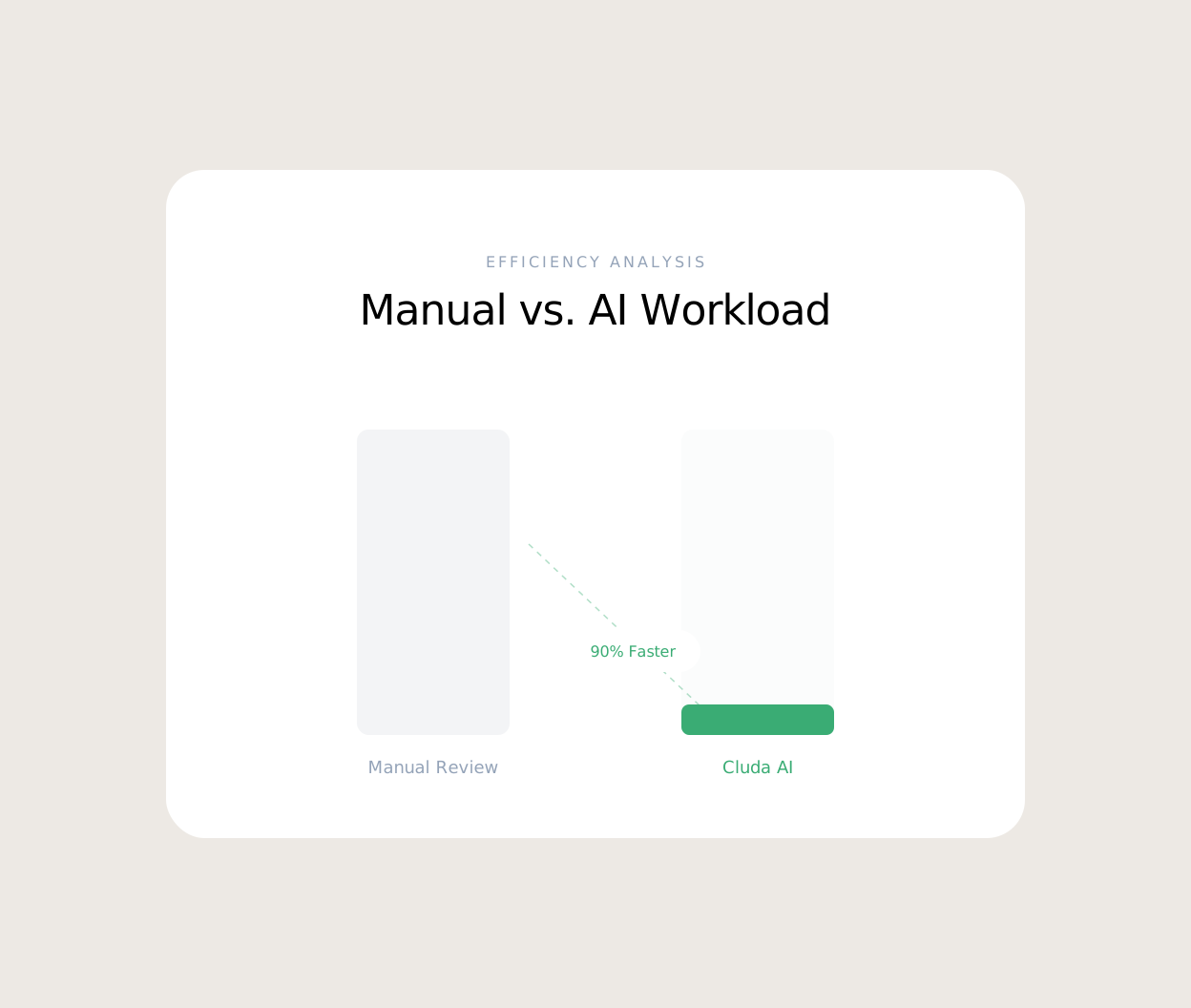
This is where Vertical AI changes the calculus. Cluda acts as an intelligent second pair of eyes. It doesn't get tired, it doesn't skim-read, and it treats an unstructured Lloyds slip with the same rigour as a digital Acturis document. Cluda’s engine ingests the new insurer PDF, standardises the formats, and instantly compares it against the expiring schedule. What takes a human 4 hours takes Cluda 4 minutes, allowing the broker to review a finished analysis rather than starting from a blank page.
The Bottom Line
In a soft market, efficiency is your competitive edge. You cannot afford to have your most expensive assets - your people - bogged down in low-value data entry. Manual policy checking is a legacy habit that is costing you money and exposing you to risk. Automating this process isn't about replacing brokers; it's about liberating them to do what they do best: trading.
Ready to stop the manual grind? Start your 14-day free trial or Book a Demo.
How to compare insurance renewal schedules efficiently?
The most efficient method is using specialised comparison software rather than manual reviews. Tools like Cluda ingest PDF schedules and automatically highlight differences in limits, excesses, and exclusions, drastically reducing admin time.
Is an automated policy checking tool reliable for commercial insurance?
Yes, provided the AI is specialised for the sector. Generic tools struggle with complex insurance tables. Cluda is trained specifically on UK commercial documents (Schedules, Slips, Wordings), ensuring high accuracy for critical terms.
Does this improve operational efficiency for insurance brokers?
Absolutely. By reducing the time spent on manual comparisons by up to 90%, brokers can focus on high-value tasks like trading and client advice, significantly lowering the overall cost to serve.